Accumulator Insurance Features: Their Role in Mitigating Losses During Volatile Football Seasons
Zara Roth · Aug 23, 2026
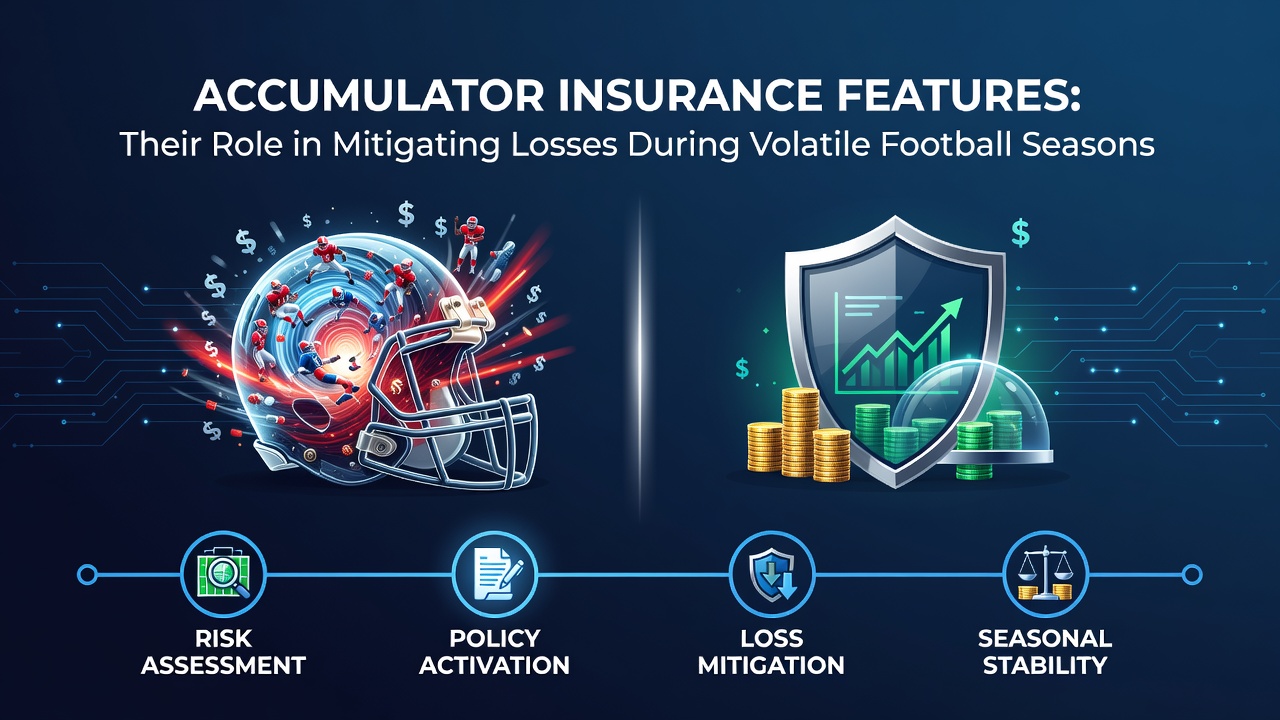
Accumulator Insurance Features: Their Role in Mitigating Losses During Volatile Football Seasons
Accumulator insurance features have gained traction among bettors navigating the unpredictable swings that define football seasons, particularly as the 2026 campaign ramps up in August. These tools provide structured protections within multi-leg bets, where a single failed selection often voids the entire wager, and they operate through predefined payout adjustments or stake refunds triggered by specific conditions such as one leg falling short by a narrow margin.
Core Mechanics of Accumulator Insurance
Operators structure these features around clear eligibility rules that activate when an accumulator includes a minimum number of selections, typically four or more, and when the bet reaches a qualifying stake threshold. Data from industry reports show that activation often returns the original stake as a free bet or cash credit if exactly one outcome fails while all others succeed, which shifts the risk profile away from total loss and toward partial recovery. Observers note that terms vary by provider, with some extending coverage to two failing legs under premium tiers, and payout calculations follow fixed formulas tied to the number of correct predictions rather than proportional adjustments based on odds.
Application in Football Markets
Football presents distinct volatility patterns because matches unfold across domestic leagues, European competitions, and international fixtures that overlap in tight calendars. Accumulator insurance integrates into markets covering match results, over-under goals, both-teams-to-score, and player props, where a single red card or late equalizer can derail multiple legs at once. Those who place accumulators on Premier League or Champions League weekends frequently encounter scenarios in which early-season form fluctuations amplify outcome variance, and the insurance component caps exposure during periods when team performances deviate from pre-season expectations. Research indicates that bettors combine these features with live in-play adjustments, allowing them to monitor unfolding matches and decide whether to add protected legs or hedge remaining selections.
Performance During High-Volatility Periods
August 2026 marks the opening of several major leagues alongside transfer-window disruptions that alter squad compositions and tactical setups. Historical patterns from past seasons reveal elevated draw rates and unexpected results in the first month, driven by fixture congestion and player fitness variables. Accumulator insurance counters these swings by converting near-miss accumulators into recoverable positions, and figures from European betting analyses demonstrate higher activation rates for football accumulators compared with other sports during opening weeks. Providers adjust insurance parameters seasonally, tightening minimum selection counts or raising stake floors when data shows increased variance across top divisions.
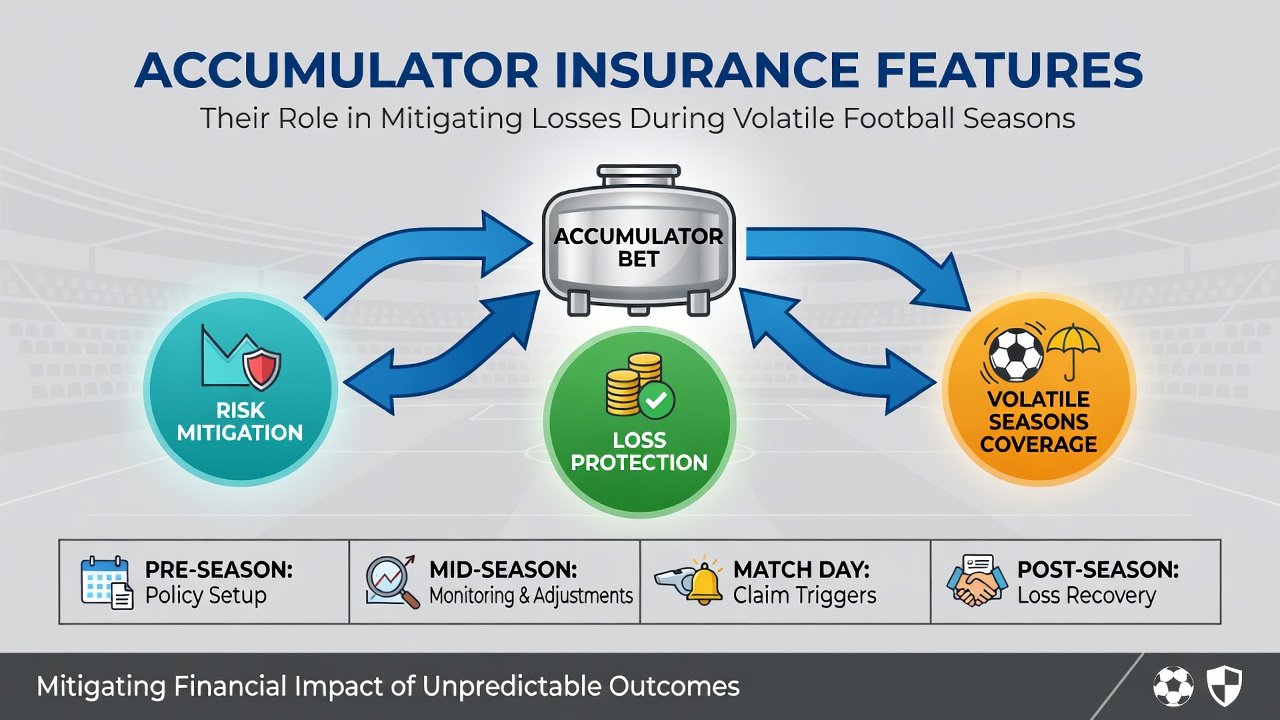
Integration with Broader Betting Strategies
Bettors incorporate accumulator insurance into larger bankroll frameworks that include stake sizing, market diversification, and timing of placements before or after team news releases. One documented approach involves building parallel accumulators where one carries insurance and another relies on standard terms, creating balanced exposure across covered and uncovered outcomes. Data from academic studies on sports wagering behavior shows that users who apply insurance features maintain longer engagement periods across volatile stretches because the mechanism reduces the frequency of complete wipeouts. Regulatory bodies in multiple jurisdictions require clear disclosure of insurance terms, including activation thresholds and expiry windows for any returned stakes, which ensures transparency in how protections function across different operators.
Data Patterns and Usage Trends
Industry tracking reveals that accumulator insurance uptake rises during months with dense fixture lists, such as those spanning August through December, when European and domestic schedules collide. Reports compiled by the American Gaming Association highlight parallel growth in protected betting products across regulated markets, with football accounting for a substantial share of insured accumulators. External research from the University of Sydney's gambling studies unit further indicates that structured protections correlate with moderated loss rates in multi-leg formats when compared against unprotected equivalents, although overall participation volumes remain tied to broader market liquidity and promotional incentives.
Conclusion
Accumulator insurance features supply defined mechanisms that address the structural vulnerabilities inherent in football accumulators, particularly amid the result fluctuations that characterize early and congested portions of the season. Their operation hinges on transparent eligibility criteria and fixed recovery rules that convert partial successes into stake returns or credits, and adoption patterns align with periods of heightened outcome variance such as the August 2026 league restarts. Available data from regulatory and academic sources confirm measurable impacts on loss mitigation without altering the fundamental probabilities governing each selection.