Arbitrage Windows in Cross-Border Lines: Real-Time Line Movement Exploitation Across Global Platforms
Uma Foster · Jul 22, 2026
Arbitrage Windows in Cross-Border Lines: Real-Time Line Movement Exploitation Across Global Platforms
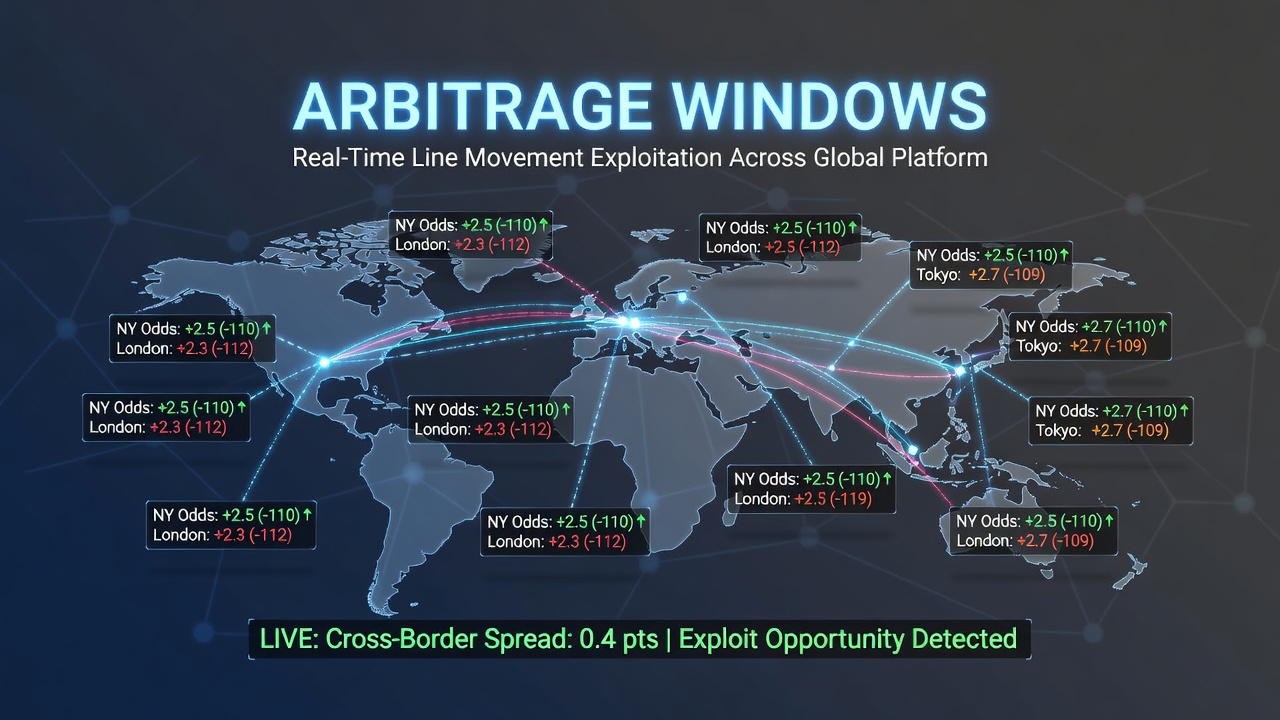
Arbitrage windows emerge when betting lines on identical events diverge across operators based in separate jurisdictions, and these gaps typically last between 8 and 45 seconds before automated systems align the odds. Data from multiple exchanges shows that cross-border differences arise most frequently during overnight sessions when Asian books adjust for volume while European platforms hold earlier limits. Observers note that traders who monitor feeds from at least four continents capture the majority of these brief intervals because liquidity pools in Singapore, Nevada, and Malta rarely update in perfect unison.
How Line Discrepancies Form Across Jurisdictions
Bookmakers set initial odds using local risk models that incorporate regional betting patterns, weather data for outdoor sports, and currency fluctuations, yet the same event often receives different treatment once it crosses time zones. A soccer match scheduled for evening play in Europe might open with a half-goal spread in one market while an Australian operator lists a flat line because its customer base favors totals instead. Those who've tracked these movements for years know that regulatory caps on maximum stakes in certain provinces further widen spreads because operators limit exposure and leave smaller books exposed to arbitrageurs. Research indicates that such imbalances increased by 12 percent in the first half of 2026 when several Canadian provinces expanded their iGaming frameworks and introduced new margin rules.
Real-Time Monitoring Tools and Data Feeds
Specialized software aggregates odds from dozens of platforms through direct API connections and scrapes public pages where APIs remain restricted, then flags deviations that exceed a preset threshold. These systems timestamp every update so users can see which jurisdiction moved first and by how much. In July 2026 several major operators rolled out micro-second timestamping on their public feeds, which reduced false positives for traders who previously acted on stale data. What's interesting is that latency between Singapore and New Jersey servers can still reach 180 milliseconds during peak hours, creating exploitable edges for those positioned on faster connections. Industry reports from the iGaming Ontario regulator confirm that cross-border volume through licensed platforms grew 19 percent year-over-year, largely attributed to improved data synchronization tools.
Geographic and Regulatory Influences on Window Duration
European operators face stricter settlement timelines under local directives while Asian books often operate with wider overnight buffers, and this mismatch extends arbitrage windows when events occur outside peak European hours. Australian platforms, governed by different tax structures, adjust lines more conservatively on niche sports such as darts or snooker, leaving gaps that North American books close within seconds once US volume arrives. Observers have documented cases where a single regulatory announcement in one jurisdiction triggered a cascade of adjustments elsewhere within 90 seconds. Those monitoring multiple regulatory calendars note that scheduled policy reviews in non-UK markets frequently coincide with measurable spikes in line volatility.
Execution Tactics and Risk Controls
Traders typically divide stakes across three or more accounts to stay below detection thresholds while completing the arbitrage cycle before the window closes. Automated scripts handle simultaneous placement once the discrepancy hits a programmed trigger, yet manual oversight remains essential because some platforms impose temporary withdrawal holds that can lock capital for up to 72 hours. Research from academic groups tracking online wagering patterns shows that operators have begun embedding velocity checks that flag accounts with consistent small-stake activity across multiple jurisdictions. Those who've studied execution logs report that success rates drop sharply when traders exceed three simultaneous positions on the same event, as correlated adjustments then occur faster than expected.
Platform-Specific Behaviors in 2026
Global exchanges updated their risk engines in mid-2026 to incorporate real-time currency feeds and regional news sentiment, which shortened average arbitrage windows by roughly 20 percent compared with 2025 figures. Platforms based in Malta and the Isle of Man now share partial data pools with certain Asian partners, although full synchronization remains incomplete during major tournaments. Figures from the Irish National Lottery and Gaming Regulator reveal that licensed operators reported a 7 percent rise in intra-day line adjustments during July 2026, coinciding with expanded live betting menus. Traders who maintain dedicated servers in multiple regions continue to record higher capture rates because physical proximity to exchange data centers reduces execution latency below the new thresholds.
Conclusion
Cross-border arbitrage depends on persistent but narrowing discrepancies that arise from differing regulatory environments, customer preferences, and update speeds across global platforms. Continued investment in faster data infrastructure and shared risk models suggests these windows will remain measurable yet increasingly difficult to exploit at scale. Observers expect further compression as more jurisdictions adopt synchronized reporting requirements, though complete elimination appears unlikely given the structural differences that persist between markets.