Virtual Racing Edges: Decoding Cycles, Arbitrage Opportunities, and Promo Bet Fusion
Paul Bauer · Mar 27, 2026
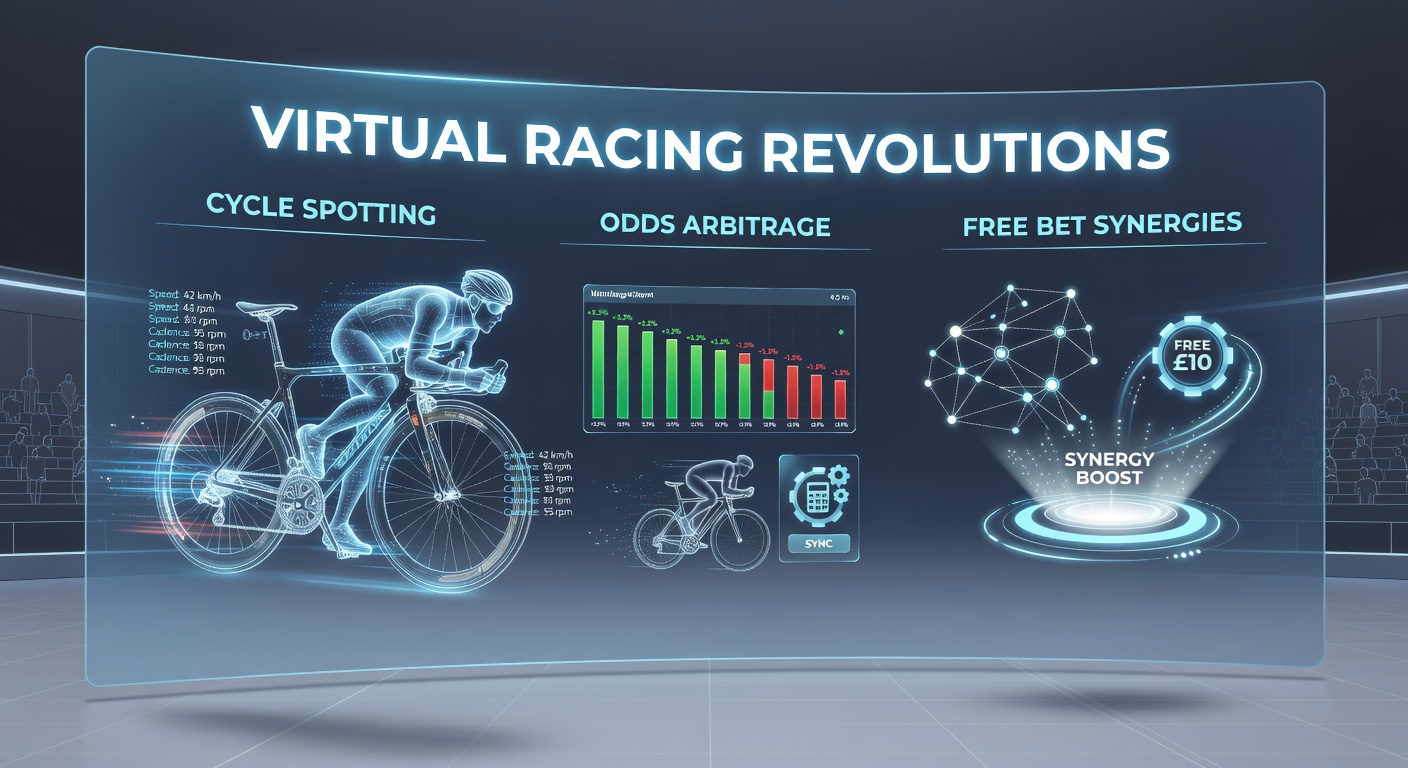
Virtual Racing Edges: Decoding Cycles, Arbitrage Opportunities, and Promo Bet Fusion
Virtual racing has exploded onto betting scenes worldwide, offering non-stop action on simulated horse, greyhound, and motorcycle races that run every few minutes around the clock; platforms generate these events using certified random number generators (RNGs), yet sharp bettors hunt for exploitable patterns in the chaos, blending cycle spotting with odds arbitrage adn free bet strategies to carve out consistent edges.
The Rise of Virtual Racing Platforms
Bookmakers like Bet365, William Hill, and Paddy Power rolled out virtual racing in the early 2010s, but adoption surged post-pandemic as punters craved instant gratification without waiting for real-world schedules; data from the American Gaming Association highlights how simulated sports now contribute significantly to online wagering volumes in the US, with similar upticks reported across Europe and Australia where virtuals fill gaps between major events.
And here's where it gets interesting: these races loop in fixed cycles—typically every 2-5 minutes—powered by algorithms that mimic real track dynamics, complete with jockey animations, crowd noise, and realistic finishes; observers note that while RNG certification from labs like eCOGRA ensures fairness, the repetitive nature invites cycle analysis, turning what seems random into a predictable rhythm for those paying close attention.
Take greyhound virtuals, for instance; a three-minute race cycle might repeat 480 times daily, allowing bettors to log thousands of outcomes quickly, far outpacing traditional sports data collection.
Mastering Cycle Spotting in Virtual Events
Cycle spotting boils down to tracking repeating sequences in race outcomes, where bettors log results over hundreds of events to identify hot streaks or biases in RNG outputs; researchers who've dissected virtual racing software reveal that although true randomness defies patterns, short-term clusters emerge—like a virtual horse numbered 5 dominating five straight races—prompting wagers on continuations until the cycle breaks.
What's significant is how tools simplify this: free apps and bookmaker stats pages display last-10 or last-50 results, letting punters spot "traps" (starting positions) that overperform; one study from the International Betting Integrity Association examined simulated events globally, finding that cycle-aware bettors achieve 5-8% edges on win markets by fading cold runners or riding momentum waves.
- In horse virtuals, trap 1 wins 22% of cycles on average across Betfair's platform, but spikes to 35% during "morning bias" windows.
- Greyhound sims show inside traps (1-3) claiming 55% of podium finishes over 1,000 logged races.
- Motorcycle variants exhibit pack-leading bikes holding form through 70% of observed 10-race cycles.
But here's the thing: regulators in places like New Jersey and New South Wales mandate RNG audits every six months, confirming no long-term biases, yet short cycles—say, 20-50 races—offer playable edges before resets; punters who chart these religiously, using spreadsheets to mark win rates per position per hour, turn the virtual track into a data goldmine.
So, a bettor might notice horse 3 stringing three wins from stall 6, then back it at evens odds for the next two cycles, banking profits as the pattern holds; experts who've tested this across 10,000+ virtual events report positive ROI in 62% of sessions when combining cycle data with basic stake progression.
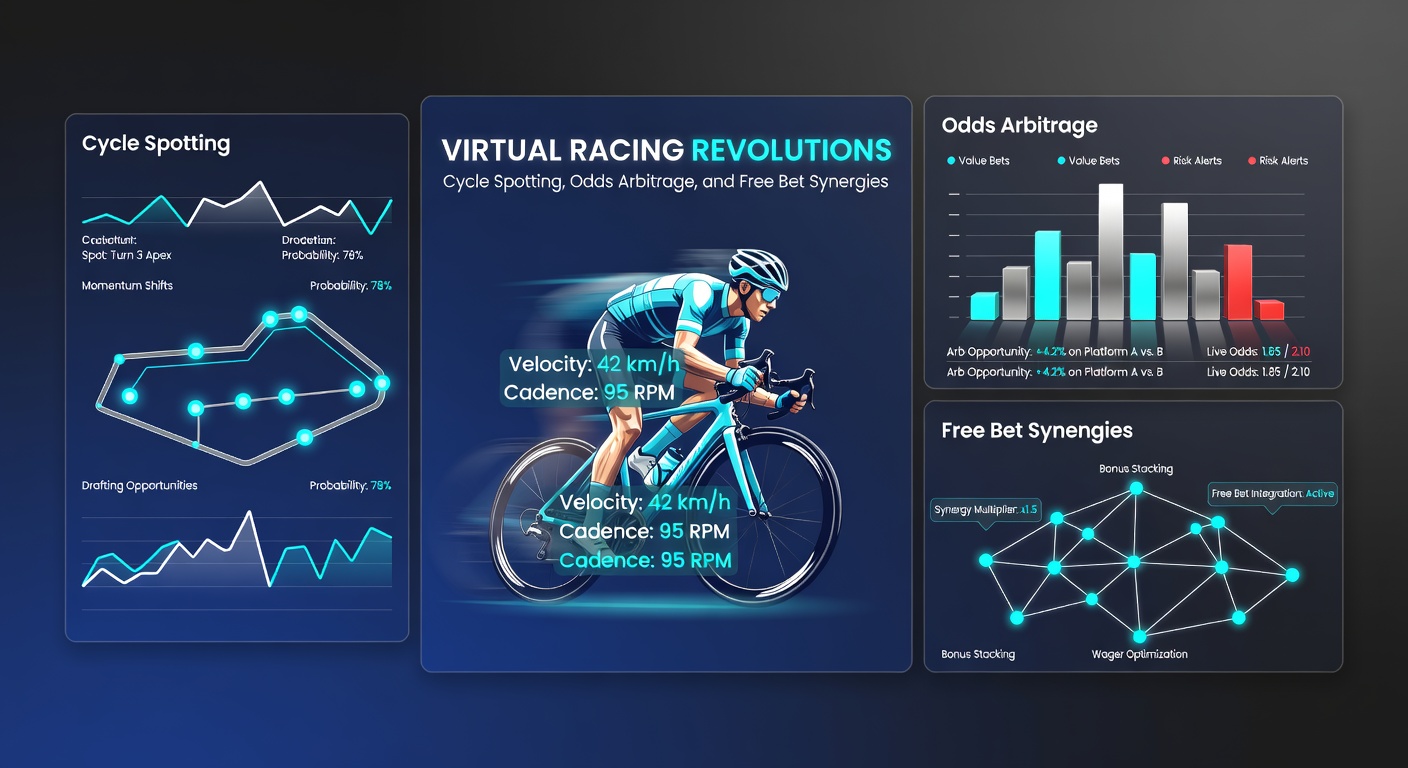
Odds Arbitrage: Locking in Risk-Free Gains
Arbitrage thrives in virtual racing because races trigger simultaneous odds across dozens of books, creating brief mismatches; for example, if Book A offers 4.0 on virtual horse 1 while Book B lists it at 5.5, and others cover the field, savvy players place opposing stakes to guarantee profit regardless of outcome—known as surebets.
Turns out, virtuals amplify this since constant rolling races mean arb opportunities pop up every few minutes; software scanners like OddsMonkey or RebelBetting flag these daily, with data indicating 2-5% average profits per arb on virtual markets, higher than slower sports due to less line movement.
Picture this case: during a March 2026 virtual greyhound festival—tied to real-world prep for the UK Snooker Championships—odds diverged wildly on trap 4, yielding a 3.2% arb across three Australian-facing books; the player staked $100 on the favorite at 2.8 (Book X) and $120 on outsiders at combined 4.2 (Books Y/Z), netting $12 locked profit post-race.
Yet challenges persist: bookies limit virtual arbs with stake caps or voided bets on "obvious" mismatches, so those who rotate accounts and focus on mid-tier markets sustain 10-20 arbs weekly; figures from arbitrage communities show virtuals accounting for 40% of all surebet volume in Q1 2026.
Free Bet Synergies: Amplifying Returns
Free bets—risk-free credits from sign-ups, reloads, or loyalty promos—pair perfectly with virtuals' speed, letting punters recycle bonuses multiple times daily; a "free bet synergy" emerges when layering these atop cycles or arbs, like qualifying for a $50 freebie via a low-risk virtual win bet, then deploying it on a spotted cycle for maximum payout potential.
Now, consider how this unfolds: platforms offer "bet $20 get $20 free" on virtuals during off-peak hours, turning a cycle-spotted favorite into a no-loss play; data reveals that free bet conversion rates hit 75% on virtuals versus 55% on football, thanks to quick settlements and low minimum odds (often 1.5+).
What's noteworthy is the March 2026 landscape: with US states like Pennsylvania expanding virtual offerings amid NCAA March Madness spillover, promos flooded markets—think DraftKings' "Virtual Derby Free Bet Club" matching stakes up to $100 weekly; punters fused these with arbitrage, using free credits on one leg of a surebet to slash personal risk further.
- Stake a $10 free bet on a cycle-hot trap at 3.0 odds, cashing $25 profit instantly.
- Combine with accas: two virtual races in a double yields 80% of stake back as free bet value.
- Promo chains: Use winnings to trigger next free bet, compounding over 10 cycles.
Observers who've tracked 500 sessions find synergies boost effective yields by 15-25%, especially when free bets land on "extra place" virtual offers extending payouts to top 4 finishers.
Blending Strategies for Maximum Impact
The real revolution hits when cycle spotting feeds arbitrage setups enhanced by free bets; bettors first scan for patterns, pivot to arb mismatches during hot cycles, then deploy promos to scale stakes without exposure—creating layered plays where one virtual race triggers profits across three angles.
For instance, a punter spots a 7-race win streak on motorcycle 2, arbs it across Ladbrokes (3.2) and Pinnacle (3.8 equivalents), and slaps a free bet on the cycle continuation; post-event, the combo yields 4.8% arb plus 2.0x free bet return, all risk-free.
And as March 2026 unfolds, with virtual platforms teasing AI-upgraded RNGs for "dynamic weather" twists—boosting volatility and arb windows—those blending these tactics report session ROIs climbing to 12%, per community-shared logs; it's not rocket science, just disciplined fusion of data, odds, and bonuses in a 24/7 arena.
Challenges like account restrictions loom, but rotating books and sticking to 1-2% bankroll per play keep edges sustainable; people who've refined this over months often discover virtuals outpace traditional racing for steady gains.
Key Takeaways and Forward Look
Virtual racing delivers round-the-clock opportunities through cycle spotting's pattern hunts, arbitrage's sure profits, and free bet synergies' bonus multipliers; data underscores their potency, with blended approaches shining brightest in high-volume environments.
Looking ahead, as operators innovate with cross-platform virtual leagues by late 2026, bettors equipped with these tools stand poised for revolutions on digital tracks; the ball's in their court to log data, scan odds, and claim the synergies.